
Functionality, formalism, mechanics, security, available market and the precise scientific dialect of the whitepaper-as-instrument define the general purpose of a "lifecycle" that, unlike a computer, is "not yet an established product category". But neither is 4-chan. Urbit is a solid-state interpreter according to the whitepaper that can answer "six ways functionally: formally, mechanically, productively, securely and practically" the question that no individual - artificial (corporate) or 'natural' - should be able to answer in an adequate way: who am I and where do I come from?
Urbit's bounty system is enabled by routine contributions made open-source by necessity, not design. The Urbit Foundation, with Hoon School and an active hackathon community, have lowered barriers to entry for potential contributors (since I, an artist, get to work & play here) presumably with the goal of decreasing the burden on Tlon to oversee the implied requirements of a growing network. Difficult to integrate into the main development branches of any open-source project (let alone a "browser war for the server side") are the perspectives of domain experts whose priorities are exclusive to those at the core.
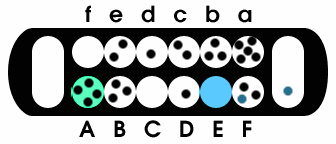
Mancala is a game about managing garbage collection. Identity is established by the rule of +1 on the last bead and entropy is introduced by breaking equilibrium.
All entities driven by sociotechnical desires produce and reproduce the episodes that define its constituent unity. On Urbit, "since only completed events are logged", committing transactions to the store only occurs when a process is complete. Compare this to the game Mancala, which, like Nock, is structured around increment.
Memoization is a programming technique where instead of letting a function perform calculations and print, we instead copypaste 'Hello World' and assign this representation to the function.